

Cybersecurity vulnerabilities continue to pose significant challenges for individuals, businesses, and organizations as digital systems become increasingly connected. From personal computers and mobile devices to enterprise networks and cloud-based applications, software weaknesses can create opportunities for cybercriminals to gain unauthorized access, steal sensitive information, or disrupt essential services. Among the most concerning security issues are zero-day vulnerabilities, which can leave users exposed before an effective security patch becomes available.
As technology advances, software developers regularly release updates to improve performance, introduce new features, and address security weaknesses. However, even widely used applications and operating systems can contain flaws that remain undetected for months or years. When attackers discover these weaknesses before developers can correct them, the potential consequences can be serious. Security professionals continue to emphasize the importance of vulnerability management, timely updates, and layered protection as organizations face an increasingly complex threat landscape.
A cybersecurity vulnerability is a weakness in software, hardware, or system configuration that an attacker may exploit to compromise a computer or network. These weaknesses can result from programming errors, improper access controls, insecure settings, or flaws in the way an application processes information. Depending on the nature of the vulnerability, an attacker may be able to access restricted information, execute unauthorized commands, bypass security controls, or disrupt normal system operations.
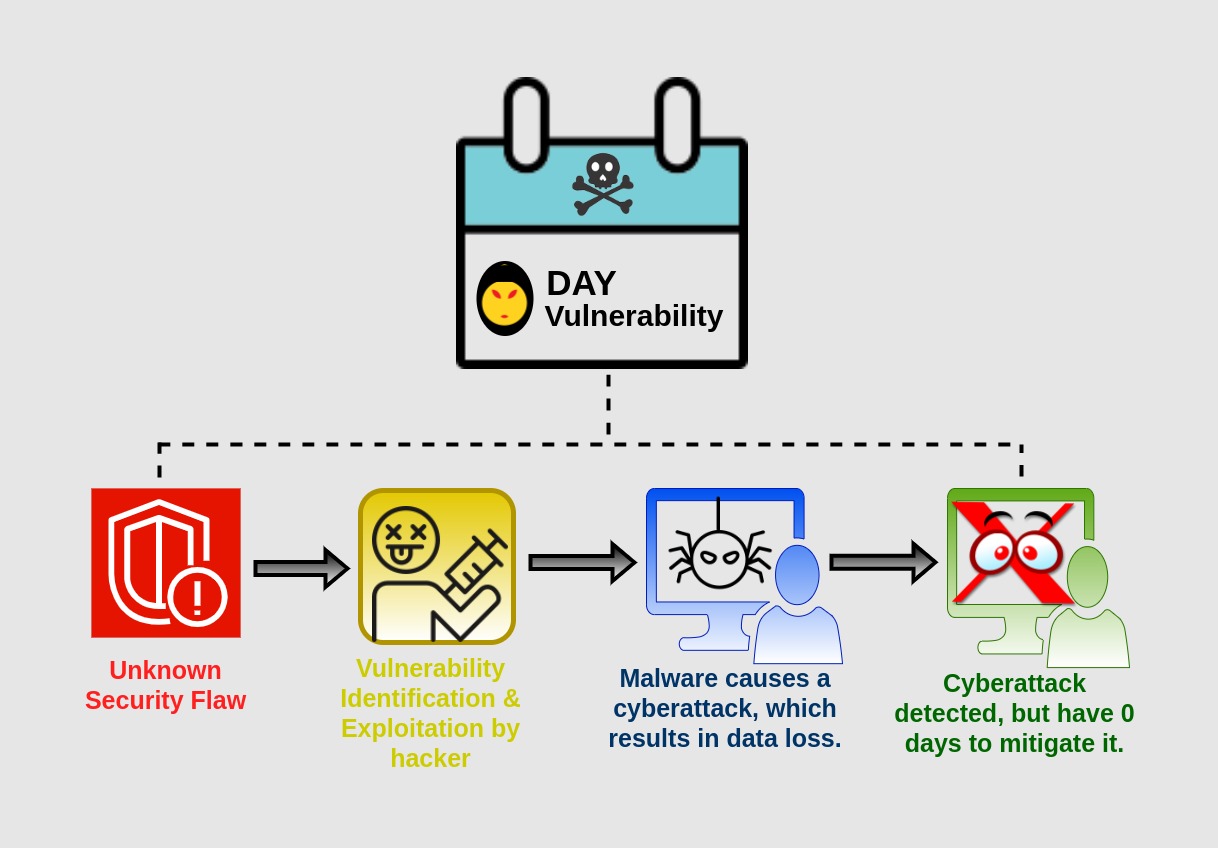
Zero-day vulnerabilities are particularly concerning because defenders may have little or no time to prepare before a flaw is exploited. The term generally refers to a vulnerability that is exploited before an effective patch or adequate defensive measures are available. In some cases, the software developer may not even be aware that the weakness exists until security researchers or incident responders discover evidence of an attack.
The distinction between a zero-day vulnerability and a known security flaw is important. Once a vulnerability has been identified and a patch has been released, organizations can take action to protect affected systems. However, systems that remain unpatched may continue to face considerable risks. Zero-day vulnerabilities create a more difficult situation because defenders may need to rely on temporary mitigations and monitoring while developers investigate the problem and prepare a permanent solution.
Zero-day attacks can be difficult to defend against because traditional security measures often rely on previously identified threats, known malware signatures, or established attack patterns. When an attacker uses a previously unknown vulnerability, security products may not immediately recognize the method being used. This does not mean that zero-day attacks are impossible to detect, but it can make identifying and stopping them more challenging.
The potential impact depends on the affected software, the conditions required for exploitation, and the privileges available to the attacker. Some vulnerabilities may allow an application to crash or expose limited information, while others could enable unauthorized code execution or provide an entry point into a larger network. If attackers successfully exploit a weakness in a system with excessive privileges or poor security controls, the consequences may extend beyond the initially affected device.
For businesses, the risks can include operational disruption, unauthorized access to confidential records, financial losses, and damage to customer trust. Individuals may face account compromise, privacy violations, or the theft of personal information. Organizations that depend on connected systems for daily operations must therefore consider not only how to prevent vulnerabilities but also how to limit the damage if an attack succeeds.
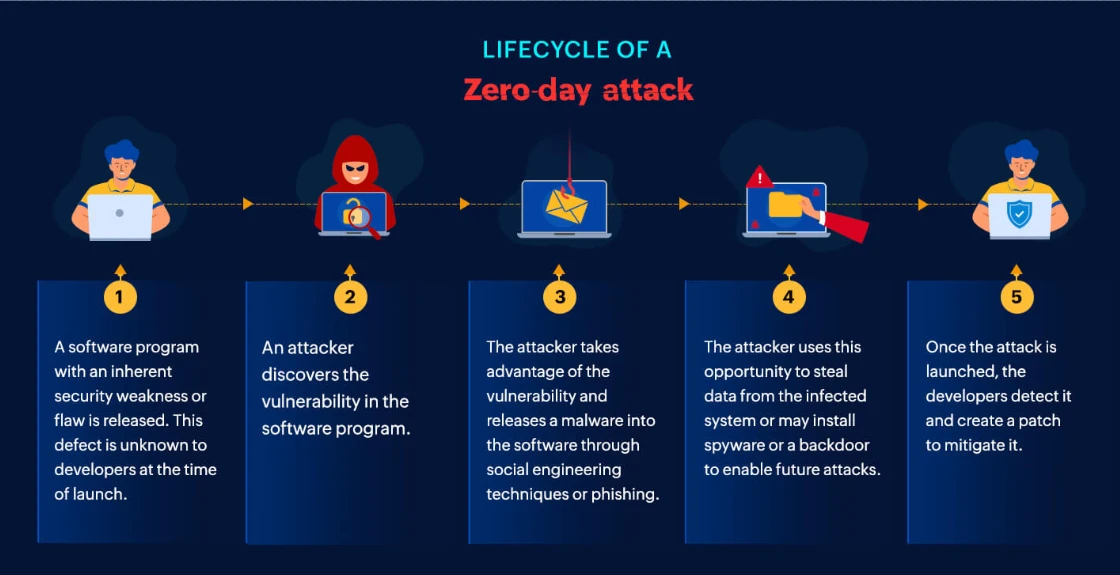
Zero-day attacks can involve several stages, although the process differs depending on the vulnerability and the attacker's objectives. An attacker may first discover a weakness through technical research or obtain information about a flaw from another source. The attacker may then develop an exploit designed to take advantage of the vulnerability under specific conditions.
The next stage involves reaching the vulnerable system. In some cases, attackers use phishing emails, malicious attachments, compromised websites, or infected downloads to persuade users to interact with harmful content. Other vulnerabilities may be exploitable through exposed network services without requiring a user to open a file or click a link. The exact method depends on the software and the nature of the flaw.
If exploitation succeeds, the attacker may attempt to gain access to sensitive information, install malware, establish persistent access, or move to other systems within the network. However, exploiting a vulnerability does not automatically provide complete control over a device. Additional security protections, restricted permissions, and network isolation can limit what an attacker is able to accomplish.
Security experts also distinguish between discovering a vulnerability and successfully exploiting it. A weakness may exist without being practical to exploit in every environment. The risk becomes more serious when an exploit is reliable, affected systems are widely deployed, and effective protective measures are unavailable or have not been implemented.
Although zero-day vulnerabilities can emerge before a patch is available, regular software updates remain one of the most effective ways to reduce overall cybersecurity risk. Many attacks take advantage of known weaknesses for which security fixes already exist. Delayed updates can leave computers and networks exposed even after developers have provided a solution.
Operating systems, web browsers, office applications, security tools, and network devices may all receive updates that address vulnerabilities. Users should install updates from official sources and pay attention to security advisories that identify actively exploited flaws. Businesses should establish patch management procedures that prioritize updates according to the severity of a vulnerability, the availability of exploits, and the importance of affected systems.
When a zero-day flaw has no available patch, organizations may need to apply temporary protective measures. Depending on the vendor's recommendations, these measures could include disabling an affected feature, restricting access to a vulnerable service, isolating a device, or increasing monitoring. Such steps can reduce exposure while developers work on a permanent fix.
Applying a patch is not always the end of the response. If attackers exploited the vulnerability before the update was installed, security teams may still need to investigate the system for signs of unauthorized access, malware, or data theft. Updating vulnerable software closes a known weakness, but it does not necessarily reverse damage that has already occurred.
Security software remains an important part of modern computer protection, but experts generally recommend using it as one layer within a broader defense strategy. Antivirus tools, endpoint detection systems, firewalls, and intrusion detection technologies can help identify suspicious activity and prevent many common attacks. Their effectiveness, however, depends on the capabilities of the tools, the configuration of the system, and the nature of the threat.
Modern security solutions increasingly use behavioral analysis to identify activities that may indicate an attack. Instead of relying exclusively on known malware signatures, these systems can monitor unusual process behavior, unexpected changes to security settings, suspicious network connections, and attempts to access sensitive resources. This approach may help identify malicious activity even when the underlying vulnerability has not yet been publicly documented.
Nevertheless, no security product can guarantee complete protection against every zero-day exploit. Attackers may use legitimate system tools, exploit weaknesses in trusted applications, or adapt their techniques to avoid detection. For this reason, organizations should combine security software with regular updates, access controls, employee awareness, and continuous monitoring.

When a security researcher discovers a vulnerability, the way the information is reported can influence how quickly affected systems receive protection. Coordinated vulnerability disclosure allows researchers to inform software developers or designated security teams so the issue can be investigated and addressed.
The process generally begins with a technical report describing the weakness and the conditions under which it may occur. Developers assess the affected products, determine the severity of the issue, and work on a patch or mitigation. Once an appropriate response has been prepared, the vendor may publish a security advisory explaining the affected versions and the recommended steps users should take.
This process can become more complicated when attackers are already exploiting the vulnerability. In such cases, security teams may need to issue urgent warnings and recommend temporary protections while a permanent patch is being developed. The timing and level of technical detail in public disclosures can be important because defenders need enough information to protect their systems without unnecessarily increasing the risk of exploitation.
Responsible disclosure also highlights the importance of cooperation between software vendors, security researchers, government agencies, and affected organizations. Cybersecurity is a shared responsibility, and effective communication can help reduce the period during which vulnerable systems remain exposed.
Detecting a zero
 Like
0
Like
0
 Dislike
0
Dislike
0
 Love
0
Love
0
 Funny
0
Funny
0
 Angry
0
Angry
0
 Sad
0
Sad
0
 Wow
0
Wow
0