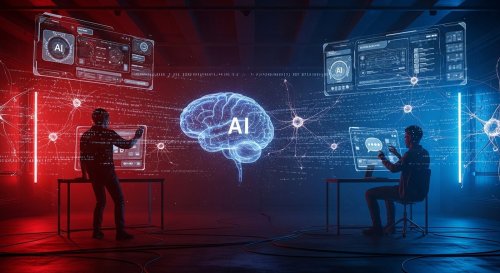

Artificial Intelligence (AI) has become a part of everyday life. From voice assistants and recommendation algorithms to fraud detection systems and smart devices, AI powers many of the technologies we use daily. While these innovations offer convenience and improved security, they also introduce new concerns about how personal information is collected, stored, and used.
Understanding both the benefits and risks of AI can help individuals make informed decisions about protecting their privacy in an increasingly connected world.
AI is often used to strengthen cybersecurity and improve digital safety. Organizations use AI-powered systems to identify threats, detect suspicious activity, and protect sensitive information more effectively than traditional methods.
.jpg)
Banks and financial institutions use AI to monitor transactions in real time. AI systems can quickly identify unusual spending patterns or suspicious account activity that may indicate fraud.
For example, if a credit card is suddenly used in an unfamiliar location or for an unusually large purchase, AI may flag the transaction and trigger additional security measures.
Modern cybersecurity solutions rely heavily on AI to detect malware, ransomware, and other cyber threats.
AI-powered security tools can:
By analyzing massive amounts of data, AI can often recognize attack patterns that human analysts might miss.
Email providers use AI to filter unwanted messages and identify phishing attempts designed to steal personal information.
These systems continuously learn from new threats and become more effective at recognizing fraudulent emails, helping users avoid scams and malicious links.
Many organizations use AI-driven verification systems to improve account security.
Examples include:
These technologies can help prevent unauthorized access while making account verification more convenient.

Despite its benefits, AI's ability to collect and analyze data also creates significant privacy challenges.
AI systems often require large amounts of data to function effectively.
This information may include:
The more data collected, the greater the potential risk if that information is misused or exposed.
AI can analyze user behavior to create highly detailed profiles of individuals.
These profiles may reveal:
While profiling is often used to personalize services and advertisements, it can raise concerns about surveillance and data exploitation.
Facial recognition technology has become increasingly sophisticated.
Although it can improve security, concerns include:
Privacy advocates continue to debate the appropriate use and regulation of facial recognition systems.
Organizations that store large datasets become attractive targets for cybercriminals.
If AI systems rely on extensive personal information, a security breach could expose sensitive data such as:
Strong security practices are essential to minimize these risks.
One of the most concerning aspects of AI is its ability to infer information that users never directly shared.
By analyzing patterns in behavior and data, AI may predict:
These predictions can sometimes reveal more about an individual than they intended to disclose.
While AI continues to evolve, there are several practical steps individuals can take to better protect their personal information.
Regularly review the privacy settings on your devices, apps, and online accounts. Limit data sharing whenever possible and disable unnecessary tracking features.
Think carefully before providing personal information online. Share only what is necessary and avoid posting sensitive details publicly.
Protect accounts by:
Before using new apps or services, review their privacy policies and understand what information they collect and how it is used.
Many applications request access to:
Grant only the permissions required for the app to function properly.
AI offers remarkable opportunities to improve security, efficiency, and convenience. It helps detect fraud, prevent cyberattacks, and protect users from a growing range of digital threats.
At the same time, the technologies that make AI powerful often depend on collecting and analyzing large amounts of personal data. This creates ongoing challenges related to transparency, consent, and responsible data use.
As governments, organizations, and technology companies continue to develop AI systems, balancing innovation with privacy protection will remain one of the most important issues of the digital age.
Artificial Intelligence is neither inherently good nor bad for privacy—it depends on how it is designed, deployed, and governed. AI can serve as a valuable tool for protecting personal information, but it can also create new risks when data collection and analysis become excessive or poorly managed.
By understanding how AI affects privacy and adopting good digital security habits, individuals can take greater control of their personal information while still benefiting from the advantages that AI-powered technologies provide.
 Like
0
Like
0
 Dislike
0
Dislike
0
 Love
0
Love
0
 Funny
0
Funny
0
 Angry
0
Angry
0
 Sad
0
Sad
0
 Wow
0
Wow
0