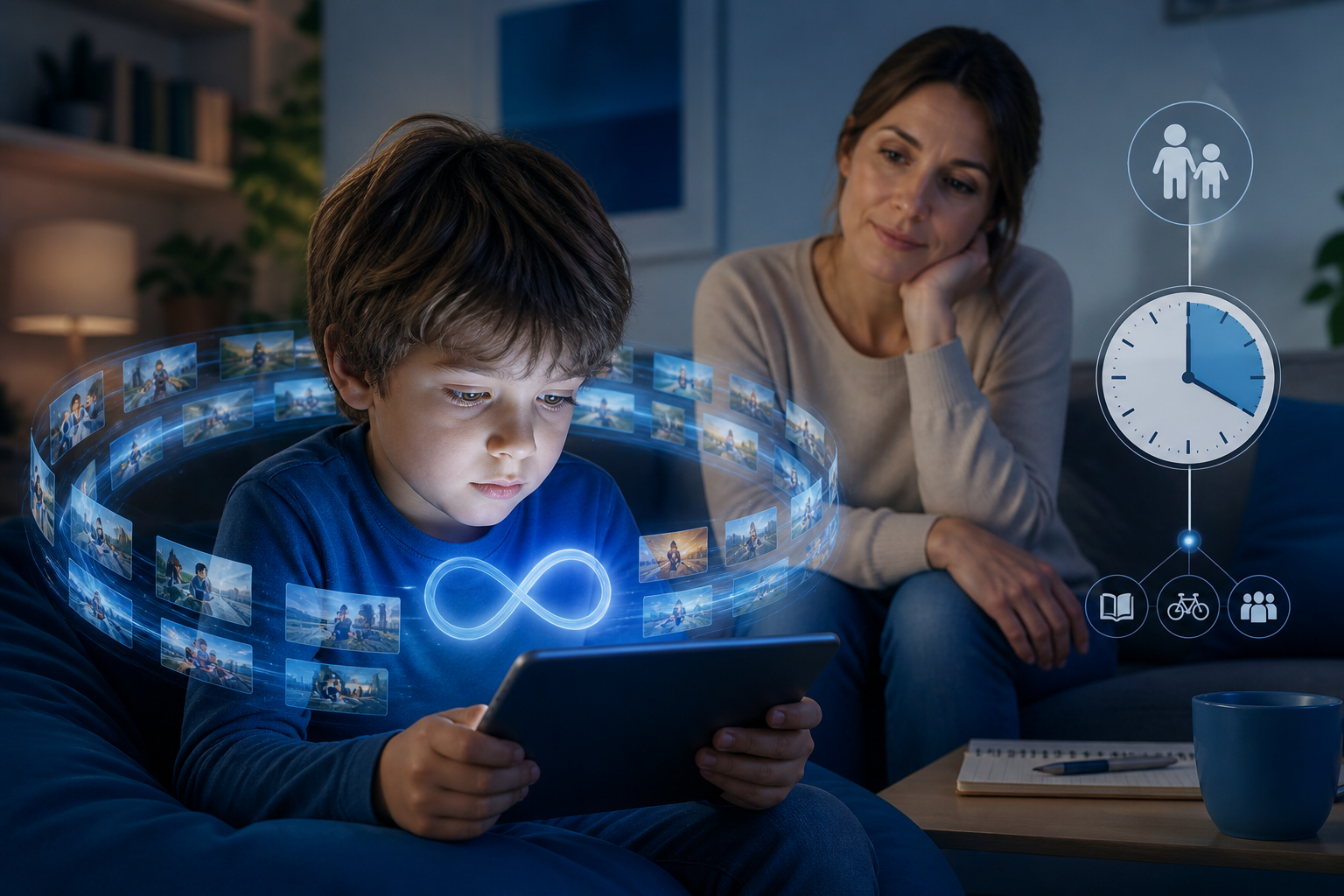
Auto-play loops are engineered to keep viewers continuously engaged, often by automatically queuing the next video, episode, or game level without any user input. For children, who are still developing self-regulation and impulse control, this design can make it difficult to stop watching or playing, even when they intend to. Over time, repeated exposure to auto-play can subtly alter daily routines, leading to longer screen sessions and reduced time for offline activities like homework, outdoor play, or family interaction. Beyond simply extending screen time, these loops can fragment attention, making it harder for kids to focus on tasks that require sustained concentration. In essence, a seemingly small feature has a cumulative impact, influencing not only how children spend their time but also how they direct their attention and manage self-discipline in other areas of life.
How Endless Content Chains Keep Young Minds Hooked
Platforms often use auto-play to seamlessly move kids from one video to the next. While harmless on the surface, endless video loops can make children lose track of time. Without consciously deciding to continue watching, they spend longer online than intended.
Because auto-play feels effortless, kids may not realize how strongly it shapes their habits.
Why Auto-Play Deserves More Attention
Uncontrolled auto-play can result in:
Extended screen time without intention
Reduced focus on responsibilities
Difficulty transitioning to offline activities
Declining patience for slower-paced tasks
Kids may feel that stopping a video requires more effort than simply letting the next one begin.
The psychological mechanisms behind auto-play loops make them particularly effective at capturing a child’s attention. Platforms often use algorithms to select content that aligns with a child’s interests, creating a personalized stream that feels almost irresistible. This “next-up” effect leverages curiosity and the fear of missing out, subtly encouraging longer viewing periods. Children, whose executive function is still developing, are less likely to notice the time passing or to resist the urge to continue watching. Over time, this can contribute to shorter attention spans for non-digital tasks, as the brain becomes accustomed to rapid, constant stimulation and immediate rewards.
Parents and caregivers may notice the impact of auto-play loops in daily routines. Children who spend extended periods in front of screens may become more irritable, distracted, or resistant to transitions away from digital devices. Mealtime, homework, or bedtime can become challenging as children struggle to disengage from endless content streams. While digital media can be an educational and entertaining tool, without intentional boundaries, features like auto-play loops can disrupt a child’s balance of activities, social interactions, and healthy sleep patterns.
How Parents Can Help Kids Break the Auto-Play Habit
You don’t have to remove fun—just add awareness.
Turn off auto-play in settings. One small toggle makes a big difference.
Set a “video count” limit. Instead of time limits, count videos watched.
Encourage choosing content intentionally. Ask what they want to watch before they start.
Create offline transitions. Activities like drawing or walking help reset attention.
Mitigating the influence of auto-play loops requires a combination of parental guidance, platform responsibility, and digital literacy education. Many streaming platforms now allow parents to disable auto-play features, set time limits, or curate content more carefully. Encouraging children to take regular breaks, engage in offline hobbies, and develop awareness of their digital habits can also help counteract the potentially negative effects. By understanding how seemingly minor design features shape attention and behavior, caregivers can make informed decisions that preserve both a child’s engagement with digital media and their overall well-being.
Reclaiming Time Through Intentional Choices
When kids learn to pause before the next video plays, they gain more control over their time. They begin choosing content mindfully, rather than being carried by the platform’s momentum.
 Like
0
Like
0
 Dislike
0
Dislike
0
 Love
0
Love
0
 Funny
0
Funny
0
 Angry
0
Angry
0
 Sad
0
Sad
0
 Wow
0
Wow
0